
 how-to
Water Damage Restoration Cost Estimate Guide for 2026
Last Updated: November 10, 2026
Quick Summary
A water damage restoration cost estimate is a written breakdown of every task, labor hour, equipment day and material needed to dry and rebuild a water-damaged home. Look for mitigation and reconstruction listed separately, the affected square footage, the water category, and a clear list of exclusions before approving any job.
- Mitigation covers emergency steps like water extraction and drying, while reconstruction covers rebuilding.
- Clean water from a supply line usually costs less to remove than sewage or floodwater.
- Check each line's quantity against your own measurements of the affected area.
- Equipment such as air movers and dehumidifiers should list units, daily rate and expected days.
- Get at least one other written bid covering the same square footage and water category.
Table of Contents
- What a Water Damage Restoration Cost Estimate Includes
- Water Damage Restoration Cost Per Square Foot and Typical Ranges
- How Cost Varies by Water Type and Damage Severity
- Reading a Florida Estimate Line by Line, with a Downloadable Price Sheet
- Getting Your Estimate Scoped and Quoted in Cocoa, Florida
- Frequently Asked Questions
Getting a water damage restoration cost estimate is the first real step toward fixing a flooded or leaking Cocoa home, and the number you receive should tell you exactly what work is being paid for. This guide walks through how restoration estimates are built, what drives the price, and how to read one before you approve it. The line items matter more than the total, because a vague estimate usually hides a surprise later.
Water damage restoration is rarely a single job. An estimate usually breaks the work into stages: emergency water extraction, structural drying, removal of damaged materials, rebuilding, and final finishes. Each stage has its own labor, equipment, and material costs. When you see those stages listed separately, you can ask questions about each one.
What a Water Damage Restoration Cost Estimate Includes
A complete estimate lists every task the crew expects to perform, along with the labor hours, equipment days, and materials needed for each task. It should also state the affected area in square feet, the category of water involved, and the drying timeline. Missing any of these pieces makes the total hard to verify.
Estimates typically separate mitigation from reconstruction. Mitigation covers the emergency work that stops further damage: pulling standing water, removing wet carpet pad, and setting air movers and dehumidifiers. Reconstruction covers the rebuilding that follows, such as replacing drywall, flooring, and trim. Keeping these two groups apart makes it easier to see which costs an insurer may cover first.
The estimate should also note what is excluded. Permits, mold testing, and work outside the affected area often fall outside the base price. A clear exclusions list protects you from unexpected add-ons halfway through the job.
Water Damage Restoration Cost Per Square Foot and Typical Ranges
Many contractors express restoration pricing per square foot of affected space, which lets you compare bids on a common basis. Per-square-foot figures vary widely with the severity of the damage and the materials that must be replaced, so treat any single number with caution. Pricing depends on labor rates, the scope of the job, and how quickly the crew must respond.
A simple way to check a bid is to multiply the affected square footage by the quoted rate and compare the result to the total. If the two figures differ substantially, ask what accounts for the gap. Restoration companies may also add a flat fee for equipment setup or after-hours response.
No published range can account for the moisture readings and materials in your specific home, so request a written estimate after an on-site inspection. For current pricing, contact the company through its website for a quote.
How Cost Varies by Water Type and Damage Severity
The source of the water and how far it has spread are the two biggest cost drivers. Clean water from a supply line usually costs less to remove than water from a sewage backup or floodwater, which carries contaminants and requires more protective equipment and disposal.

Severity matters just as much. Water that has soaked only the first few inches of drywall can often be dried in place. Water that has wicked into framing, subfloors, or insulation may require removal and replacement, which raises labor and material costs. Longer drying times also add equipment rental days to the bill.
Watch out: a delayed response is one of the most expensive mistakes. Materials that stay wet for more than a few days can develop mold, and remediation added to a water job can significantly increase the total.
Reading a Florida Estimate Line by Line, with a Downloadable Price Sheet
A restoration estimate is easiest to evaluate when you read it in the same order the work happens. Start at the top with the emergency mitigation lines, then move through drying, demolition, rebuilding, and finishes.
For each line item, check four things. First, confirm the quantity against your own measurements of the affected area; a crew that bills 180 square feet of flooring replacement for a 120-square-foot room should be able to explain the difference. Second, confirm the unit of measure, since some lines are priced per square foot, some per linear foot, and some per day or per hour. Third, confirm the task is tied to a specific moisture reading or damage observation rather than a general allowance. Fourth, note whether the item is a material, a labor charge, or an equipment rental, because each category behaves differently if the job runs longer than expected.
Equipment lines deserve particular attention. Air movers and dehumidifiers are usually billed per unit per day, so an estimate should state the number of units, the daily rate, and the expected number of days.
Demolition and replacement lines should be itemized separately. Removing drywall, carpet pad, or baseboard is a different task from installing new material, and each should carry its own cost. If a material is marked for replacement, ask whether cleaning or drying in place was considered and why it was rejected.
Finally, check the lines that are easiest to miss: disposal fees, permit costs, protective equipment for contaminated water, and any after-hours or emergency surcharge. If these are excluded, the estimate should say so in writing.
To make this review practical, build a simple comparison table with columns for line item, quantity, unit, unit price, and total, and check each row against your measurements and the questions above. Two or more bids laid out this way reveal quickly where one contractor has added scope or where another has omitted it.
The table below lists the checks to run on each estimate line, drawn from the review steps covered in this section.
| Check | What to confirm | Why it matters |
|---|---|---|
| Quantity | Matches your own measurements of the affected area | Catches inflated square footage |
| Unit of measure | Square foot, linear foot, day or hour | Units differ and change the total |
| Moisture tie | Linked to a reading or observed damage | Rules out general allowances |
| Cost category | Material, labor or equipment rental | Each behaves differently if the job runs long |
| Equipment lines | Units, daily rate and expected days stated | Vague drying lines are hard to verify |
| Excluded items | Disposal, permits, protective gear, surcharges | Unlisted charges often appear at final billing |
Getting Your Estimate Scoped and Quoted in Cocoa, Florida
An accurate estimate depends on what the inspector can see and measure, so a few preparation steps can shorten the process and improve the quote.
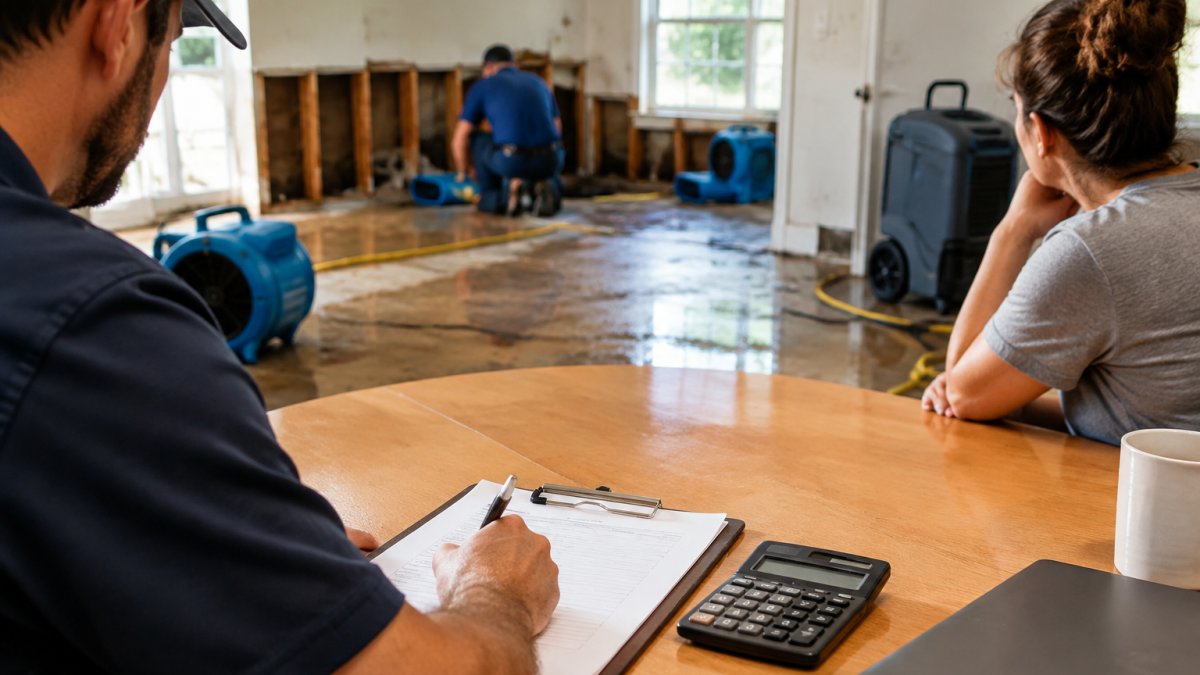
During the inspection, the technician typically measures the affected area in square feet and records moisture readings in walls, floors, and subfloors. Readings are compared against a dry reference reading from an unaffected area of the same material, which tells the crew how far moisture has traveled.
The technician should also identify the water source and its category. Clean water from a supply line, water that has picked up contaminants from a drain or outside surface, and water from sewage each call for different handling and disposal, and the category should be stated on the estimate.
Ask for a written estimate that lists each stage of work with its own cost, along with the measurements and moisture data that support it. A quote that gives only a total gives you nothing to verify.
When you receive the estimate, compare it against at least one other written bid for the same scope, and make sure both bids use the same square footage and water category. Differences in scope are more often the reason for price gaps than differences in rates, so align the assumptions before comparing totals.
Frequently Asked Questions
How expensive is it to fix water damage?
The cost depends on the water category, how far the water spread, and how much material must be removed. Extraction, drying equipment, and rebuilding are the main line items. Clean water from a supply line typically costs far less to address than contaminated water that requires removing flooring, drywall, and insulation. Ask for an itemized estimate so you can see which charges come from equipment days, labor hours, and materials. Compare quotes on the same scope of work, not just the bottom-line total.
How much does water damage restoration cost per square foot?
Many providers price affected areas per square foot, and the rate rises with severity. Light surface water on a small area costs less per square foot than deep saturation that reaches subfloors and wall cavities. Ask whether the per-square-foot figure covers only the affected footprint or the whole room, and whether drying equipment and demolition are included. A per-square-foot number alone does not show the full bill, so check the line items that sit on top of it.
What should a water damage restoration estimate include?
A complete estimate lists the water category, the affected rooms and square footage, extraction and cleanup, drying equipment with expected days, demolition of damaged materials, rebuild materials and labor, and any after-hours or emergency charges. It should also note the moisture readings used to define the scope. If an estimate lists only a total, request the breakdown before approving work. Florida homeowners should also confirm whether mold testing or remediation is included or billed separately.
Does Fix it to List it, LLC provide a free estimate for water damage in Cocoa, Florida?
Fix it to List it, LLC provides mold and water restoration along with property repairs in Brevard County, Florida. For current pricing and a quote tailored to your property, contact the company directly through its website. Prepare photos of the damage, the affected rooms, and any insurance claim number so the estimate reflects the real scope of work.
